Plant Care Basics
In this blog we will go over the basics of plant care to keep your plant pals always feeling (and looking) their best.
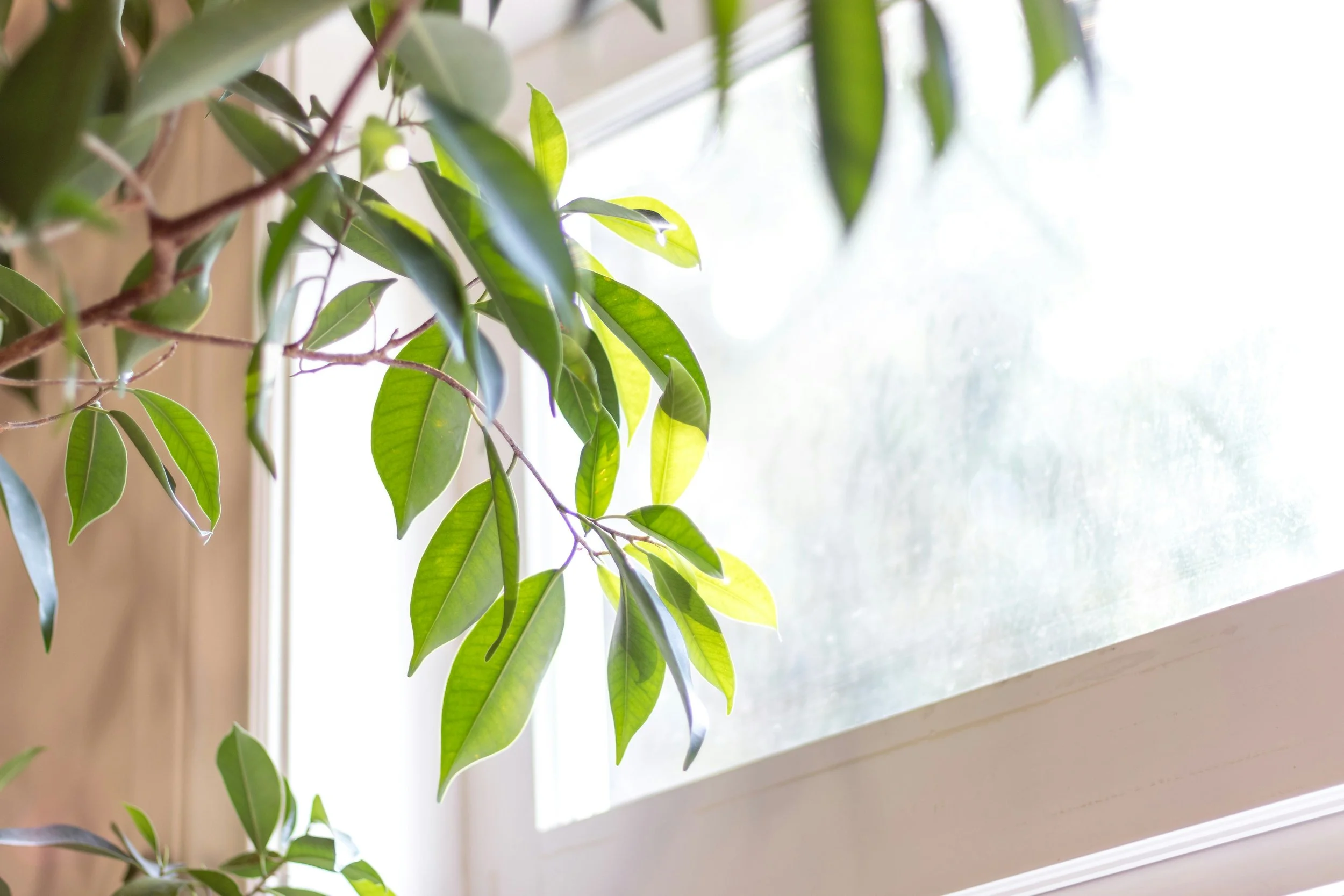
Sunlight, it’s what plants crave!
There are two main lighting categories used for all plants, direct and indirect light (called “sun” and “shade” for outdoor plants). Houseplant lighting recommendations are then broken up into three other categories: bright light, medium light, and low light. Many of these categories overlap and can change throughout the year as the sun moves from south to north and back again.
Direct vs Indirect Sunlight
The broadest and easiest categories of lighting are direct and indirect light. Direct light is when the sun’s rays make a straight path to touch the leaves of a plant. Plants that require bright direct light, often labeled “bright light”, can handle the heat and intensity of the sun, often needing the brightest light available in order to grow, maintain their shape, and even bloom. Not all direct light is created equal, however. Direct morning light, like that found entering an east-facing window, is less intense than that found in the afternoon, coming through a west-facing window. South-facing windows also provide direct light since sunlight will often come through that window all day, depending on the time of year.
When a plant’s care instructions indicate bright indirect light, this refers to light that is generally bright but does not take a direct path to the plant (i.e. the light bounces off another object before it hits the plant’s leaves). This type of light is meant to mimic the lighting found at ground level beneath the canopy of tropical rainforests, where many houseplants can be found in their natural environment. Plants that are placed in an east-facing window receive some direct light in the morning, but are mostly in indirect, bright light throughout the day. When plants are placed near a south- or west-facing window, just outside of the direct light zone, they are receiving bright indirect light.
What Does Medium Light Mean?
Also falling into the indirect light category is medium light. A plant in a spot with medium light will never receive direct sunlight; the light is first diffused or filtered by another object, such as a tree or curtain. Medium light can be found within a bright room but farther away from a window. Depending on the region or time of year, the spot in front of a north-facing window is sometimes categorized as medium light, with only filtered or diffused sunlight entering the window throughout the day. Plants that tolerate medium light are those that are often burned by direct sunlight or perhaps lose their leaf color when in bright light. Some plants that need bright indirect light can tolerate medium light, but not always.
What Does Low Light Mean?
The last type of lighting is low light. This lighting is found far away from a bright window, within a room with a north-facing window, or in a room without windows but consistent overhead lighting. There are few plants able to truly thrive and grow in low light. There are low light-tolerant plants, however, which are able to use minimal natural light or artificial light to perform the tasks needed to survive. Low light does not mean no light, however, as all plants will eventually meet their demise without light. Luckily, we have come far in developing artificial light to supplement sunlight, with grow lights and lightbulbs blending into home decor seamlessly.
Which Direction Does Your Room or Window Face
South-facing window: These windows are often considered the brightest, providing bright direct to bright indirect light throughout the day. Depending on the time of year, light that enters south-facing windows can be intense, ideal for succulents and cacti, but burning the leaves of more sensitive plants. The area around a south-facing window is bright indirect light, and fades to medium then low light the farther away you get.
North-facing window: Because no direct light enters these windows, they offer medium light. The area immediately surrounding a north-facing window can be medium to low light, often depending on the time of year.
East-facing window: Receiving direct morning light and indirect afternoon light, the spot directly in front of east-facing windows is usually categorized as bright indirect light. The area around these windows tends to provide medium light, moving into low light farther away.
West-facing window: These windows are the second brightest, allowing in afternoon sunlight. Directly in front of a west-facing window provides ample direct sunlight, which can be too intense for some houseplants. The area around a west-facing window but outside of direct light is considered bright indirect light, moving into medium and then low light less quickly than an east-facing window.
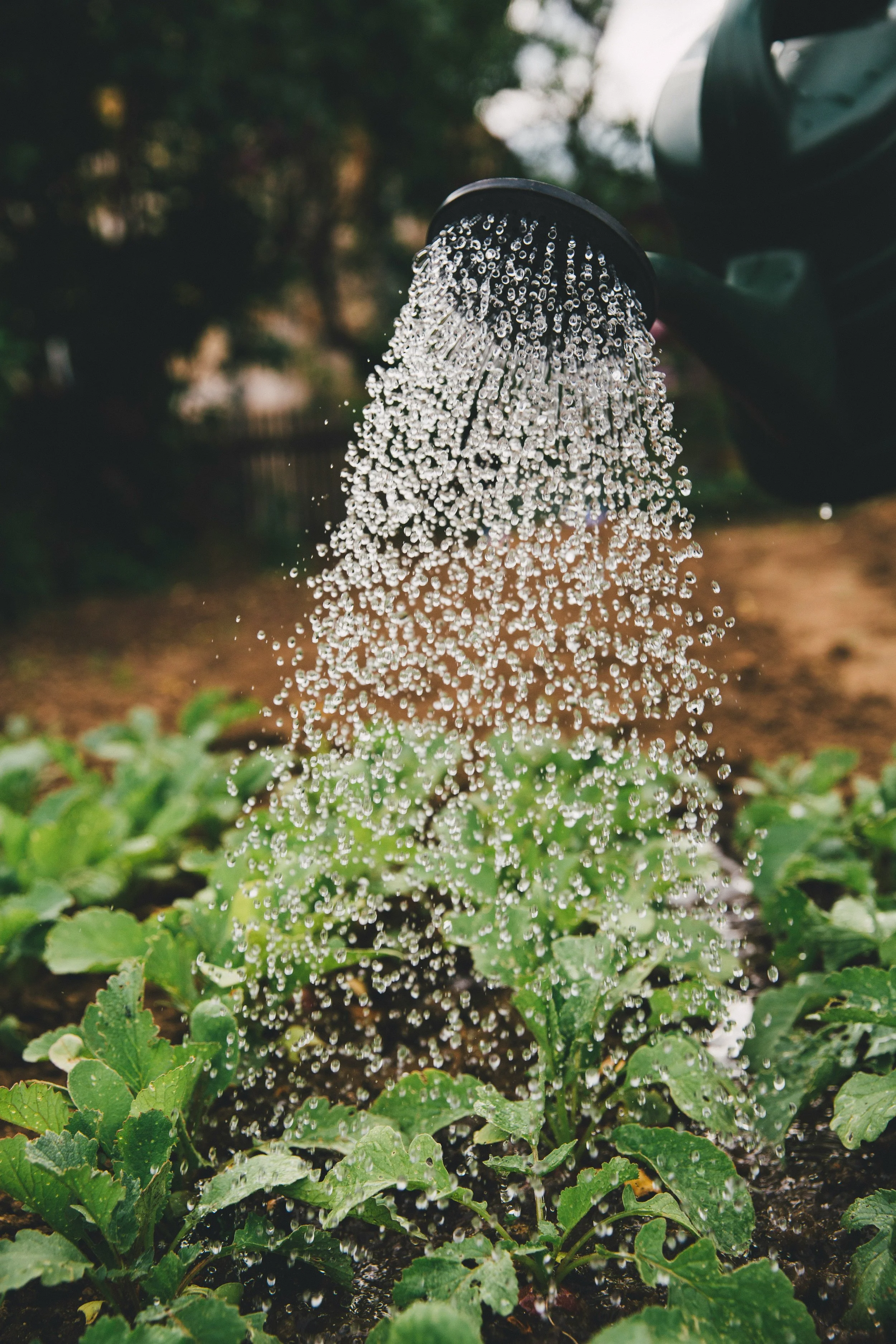
Water, it’s essential!
Plants can’t survive without water, but they probably don’t need as much as you think. When it comes to watering your plants, the key things to remember are:
Check your plants at least once per week
Only water when the top two inches of soil feel dry
In summer, plants may dry out quickly
Cut back watering in winter, when plants aren’t growing
Remember plants like soil that’s lightly moist, never soggy
How often should you water your plants?
There’s no one-size-fits-all answer. Plants need different amounts of water depending on time of year and species. In dry, hot summers they may need water every couple of days. In winter, maybe every few weeks.
The general rule is: water when the top two inches of soil feel completely dry. That will stop you overwatering.
How should you water your houseplants?
Water the soil, not the leaves. This ensures it goes straight to the roots (and doesn’t splash everywhere).
When is the best time to water your plants?
Honestly, with houseplants it doesn’t make a huge amount of difference what time of day you water. That said, first thing in the morning is the absolute best time for watering.
This is because your plant is preparing for a day of growing and will be ready to suck up all that water. If you water at night your plant will wait until the next morning to start drinking.
How do you know if you’ve overwatered your plants?
It’s pretty easy to tell if your plant has been overwatered. Some of the clear signs are:
Lots of leaves are yellow and limp
Very floppy leaves
Dropping lots of leaves. A waterlogged plant may shed leaves from stress
Soil that feels very soggy, even days after watering
Moldy soil. Mold and fungus love damp conditions
Signs of underwatering
The signs of underwatering are probably what you’d expect:
Dry, wilted leaves
Soil feels dry and is pulling away from the edges of the pot
No growth. A plant can’t grow without water
Light brown, faded leaves
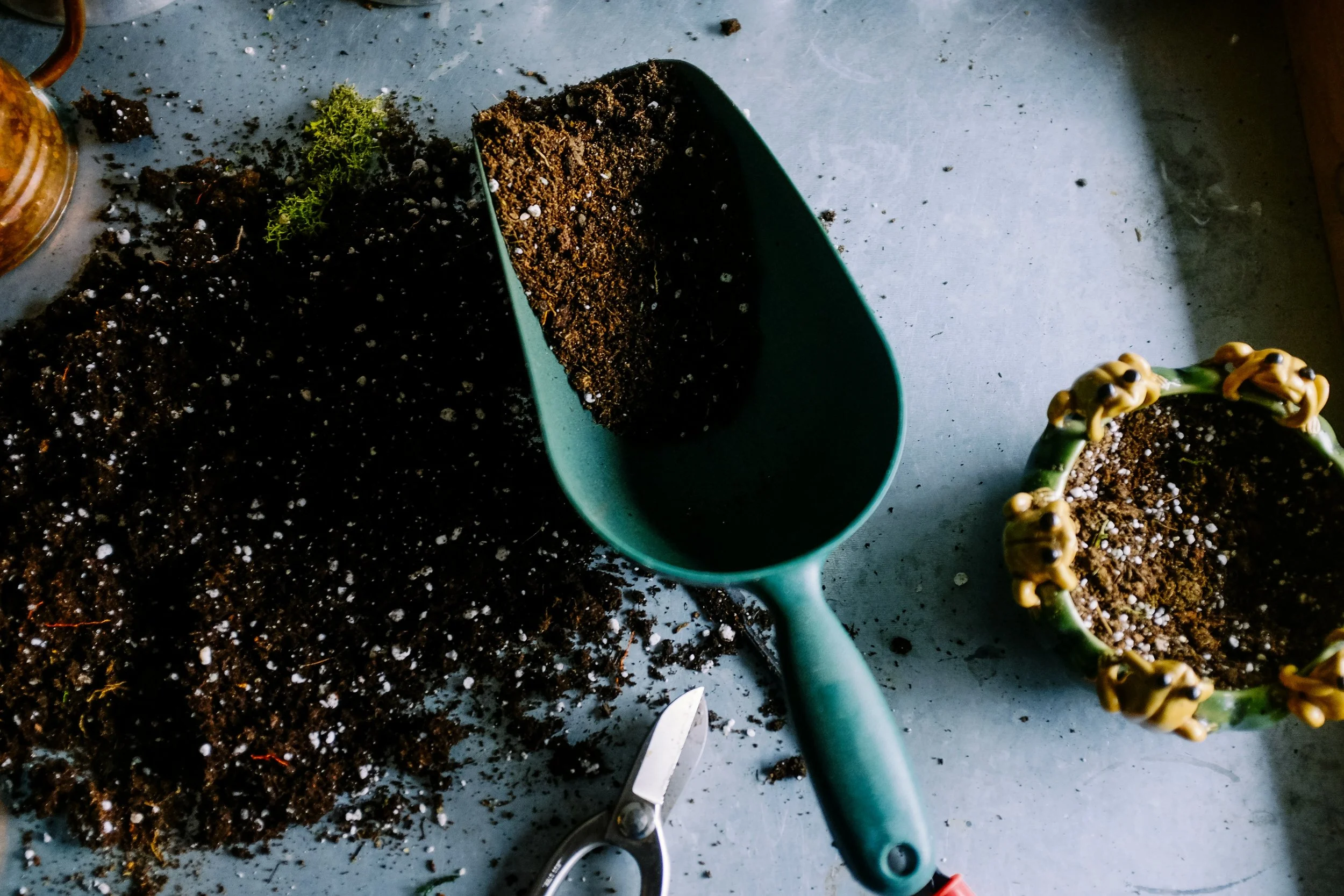
Potting soil, it’s more than just dirt!
When it’s time to repot an indoor plant, often the easiest decision is which new container to pot it in while the most difficult can be which soil to choose. Any basic potting mix will be okay for most plants, but it won’t necessarily be the best.
There is a lot that goes into a good potting mix, so which one is “good” is dependent on which plant will be sitting in it. Potting mixes are usually soilless, meaning they are made up of a mix of ingredients, none of which are actually soil like you would find outside.
The following are common ingredients you might find in different potting mixes:
Peat Moss: Usually the largest quantity component in mixes, peat is a soil amendment used to increase water and nutrient retention and adjust pH for acid-loving plants
Peat Humus: Decomposed organic matter found in peat bogs
Sand: Tiny, sharp particles that improve drainage
Perlite: A form of volcanic glass, heated until it expands, used for aeration in soil
Vermiculite: Increases water retention, good at keeping seedlings from drying out when added to a starting mix
Earthworm Castings: Broken down organic matter (thanks to worm digestion), packed with minerals and nutrients
Limestone: Alkaline, used to buffer acidity of other growing medium (peat moss, pine bark)
Western Fir Bark: Increases aeration and improves water retention
Compost: Decomposed organic matter, rich in nutrients, improves water retention and drainage
Horticultural Charcoal: Made up mostly of carbon, used to improve drainage and acts as a filter to remove impurities that can be harmful to roots.
Potting soil vs. potting mix, garden soil, & topsoil
Potting soil vs. potting mix: Though these terms are used interchangeably, there is a difference. Potting soil may or may not contain soil, while potting mix is strictly a soilless medium. Potting mix is sterile, which makes it safer for plants because it doesn’t contain pathogens such as fungus or other diseases.
Potting soil vs. garden soil: Garden soil is a blend of soil and soilless ingredients that is used to improve garden beds. It is sometimes added to homemade potting mixes, but is not recommended for use by itself in containers as it can compact more easily, causing root rot and drainage issues.
Potting soil vs topsoil: Topsoil is soil taken from the top layer of the earth. Quality can vary widely. Though it can be used in beds and borders, it’s also used for filling in holes, building berms, or other uses where quality is not a factor. Topsoil is less improved than garden soil and is not suitable for containers.
Type of potting mixes
There are many different blends to respond to various plant needs. Here are some of the major types:
All-purpose: Formulated for general indoor and outdoor use, including houseplants, hanging baskets, window boxes, ornamentals, herbs, and edibles. These can also be found under other label descriptions such as potting soil, potting mix, and container mix. Ingredients vary according to brand.
Indoor potting mix: These include all-purpose or mixes specifically labelled for indoor plants. They are intended for general use for most houseplants. Look for blends that contain no compost or bark, which can shelter fungus gnats, a common indoor pest.
Raised beds: Formulated for outdoor raised bed plantings, these mixes may be fortified with nutrient-rich ingredients for growing vegetables and other heavy feeders.
Garden soil: This soil-based medium may contain organic or inorganic enhancements as well as fertilizer. It is intended for use in raised beds or in-ground garden beds.
Seed starting mix: This soilless blend is lighter and quick-draining to encourage healthy root development. The fine texture promotes higher germination by allowing better soil contact with seeds, while the sterilized medium helps prevent growing issues such as damping off disease.
Cactus and succulent mix: These low-water plants prefer a leaner soil that dries out quickly. These mixes contain a higher ratio of perlite, sand, or other inorganic material to provide optimal drainage and allow air to the roots.
African violet mix: These popular flowering tropicals prefer a warm moist environment that simulates their native jungle habitat. Formulated for extra aeration, improved drainage, and moisture retention, this mix can also be used for other houseplants.
Orchid mix: Growing natively on tree bark in tropical rainforests, these exotic flowers require a soilless potting mix comprised primarily of bark chips. Charcoal and perlite may be added to improve drainage. This mix is also suitable for bromeliads and other epiphytes.
Potting soil FAQ's
Does potting soil go bad?
Peat moss and other ingredients in potting soil decompose, resulting in compaction and a loss of nutrients. Used potting soil can become contaminated and develop soil pathogens. For optimal results, potting soil should be replaced at the beginning of each growing season. Opened bags should be used within 6 months, while unopened bags can last 1 to 2 years from purchase.
Can you reuse potting soil?
Used potting soil can be rejuvenated, though there is an increased risk of disease if not done properly. If the mix smells bad or is moldy, spread it out in the sun and allow to dry in order to kill pathogens. Add fresh peat moss or coconut coir to make the soil lighter. Nutrient-rich additives can include compost, earthworm castings, bone meal, and kelp meal. Used potting soil can also be recycled into flower beds, vegetable plots or the compost pile. Don’t reuse soil from a container where a diseased plant has grown.
Do you need to add fertilizer?
Containers are quickly depleted of nutrients due to regular watering. Even fresh potting mix that contains fertilizer will need supplemental nutrients. Midway through the growing season, apply a water-soluble fertilizer such as fish emulsion or seaweed every two weeks.
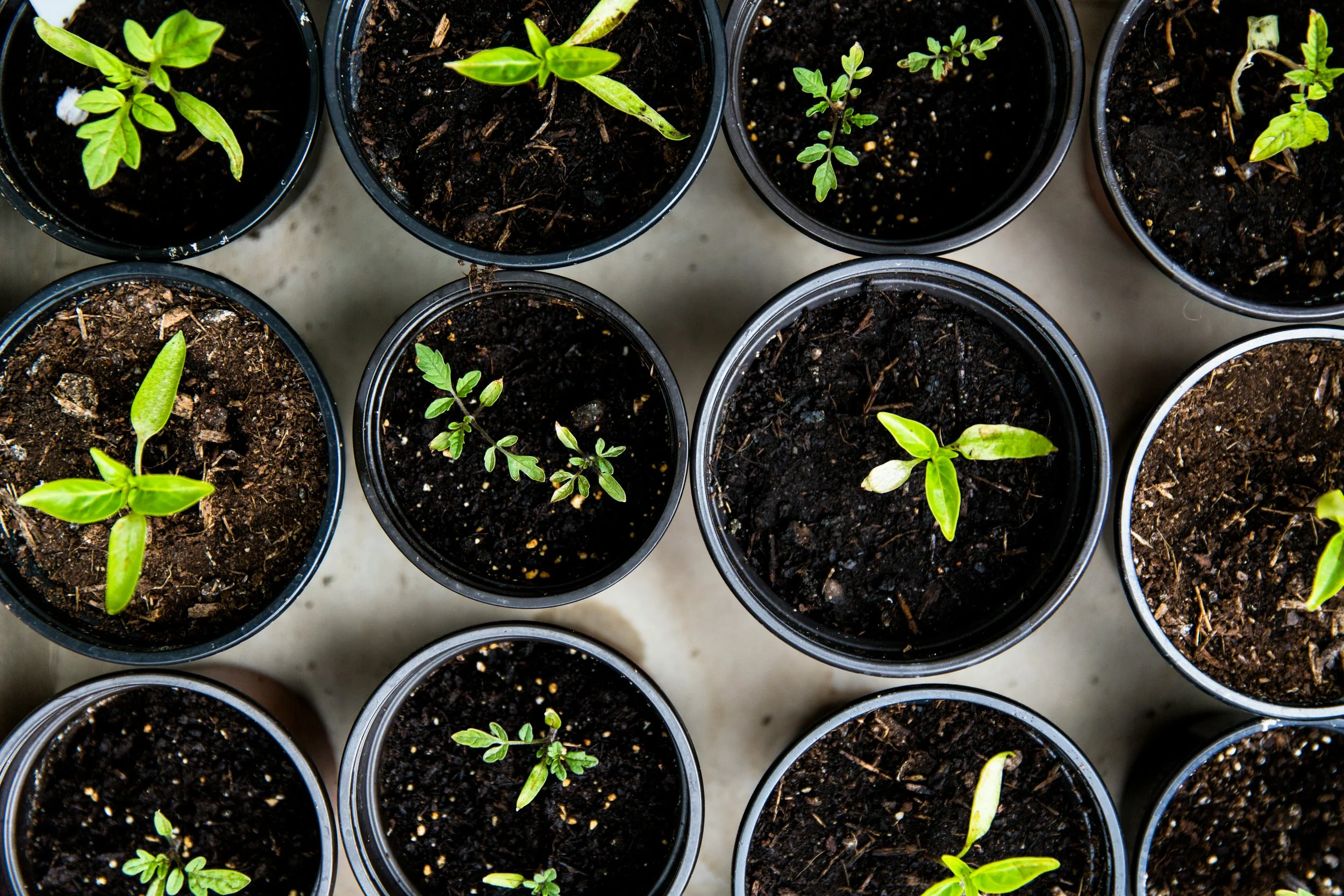
Pick your pot, size really does matter!
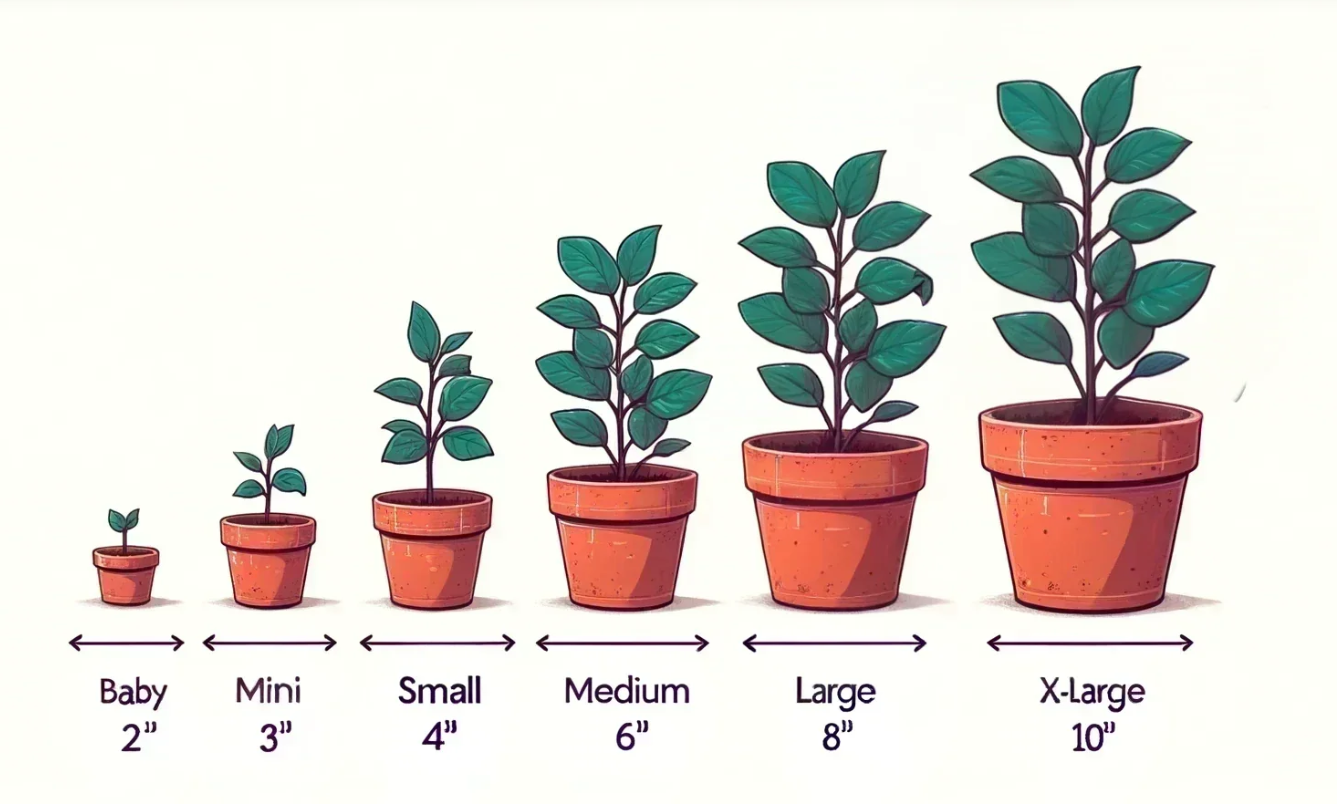
Understanding pot (and plant) sizes can be tricky and confusing, especially for those just starting out.
Pots and planters are measured by the opening at the top of the pot rim. The sizes range in inches, from a very small 2.5" pot, all the way up to an extra large 12" and 15" pot. The most important point to keep in mind when picking the size of your pot is that it should be large enough to accommodate your plant and additional potting soil to allow for additional soil around the root ball.
Most plant gurus recommend purchasing a pot about 2" larger than the size of the plant you are purchasing or replanting. For example, a 4" plant in a nursery container would be paired with a 6" pot to provide enough space for additional soil and for future growth.
What are the different types of planters?
The type of planter you choose should depend on the type of plant, your lifestyle, and your aesthetic preferences. Here's a broad overview of the types of planters available:
Terracotta or ceramic planters: Terracotta or ceramic planters are classic options that provide a rustic and earthy aesthetic. These pots are great for moisture-loving plants as they are porous and allow for good air and water movement.
Plastic planters: Plastic planters are versatile and affordable. They come in a wide range of sizes, shapes, and colors, making them a popular choice for indoor and outdoor gardening.
Wooden planters: Wooden planters provide a natural and rustic look. They are perfect for organic gardening as they do not leach harmful chemicals into the soil.
Metal planters: Metal planters can add an industrial or modern touch to your garden. They are durable and can withstand harsh weather conditions.
Fiberglass planters: Fiberglass planters are lightweight yet strong, making them suitable for larger plants. They offer a wide range of finishes and colors, allowing for a lot of design flexibility.
Concrete planters: Concrete planters offer a contemporary look and are ideal for larger plants and trees. They provide excellent insulation and are extremely durable.
Now that you know the basics you and your happy plants can thrive!
Check out our other blog posts for more tips, tricks, and interesting information! Hope to see ya at the Man Cave!
